We moved to a house in Vancouver, which is pretty crazy if you know the local real estate market. Never thought I’d be able to afford an actual house in a central neighbourhood.
As is my wont, I think a lot about the history+policy that led us here. I’m in a pocket of East Van that popped up overnight circa 1912 in a speculative building boom. Tons of cookie-cutter houses from Sears catalogs (that have since become quite nice+diverse through the magic of How Buildings Learn).
In the 1960s, the area was pre-emptively downzoned to forbid apartments. And so my street is essentially frozen in the same physical shape as a century ago, even though a lot more people want to live here now. I am arguably a beneficiary of this approach to urban planning; I get a house with a backyard in a very central area, at a (relatively) low price because I didn’t have to compete with apartments+condos for the land. It works out a lot worse for the people who are forced out to the ‘burbs.
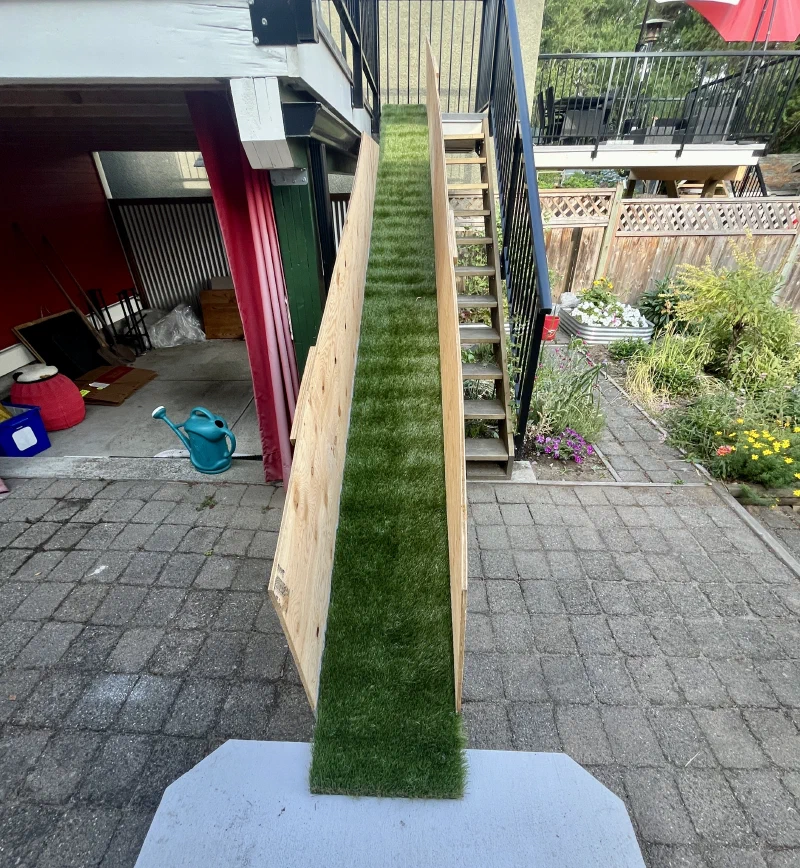
Our old greyhound had trouble with the stairs, so we had a ramp made for him:
It’s nice to be able to make changes like that without asking permission, because coordination is hard! For example I considered installing a heat pump in our old condo, but never quite got around to seeking permission from the strata council. Here I can just do things.
This is the first time I’ve lived on a quiet side street in Vancouver (because we tend to concentrate multifamily housing on busy arterial roads), and that’s a massive improvement to my quality of life. I’m also loving having windows on all 4 sides. We need to do better at allowing condos+apartments with nicer layouts.
Unite Here Local 40 is a BC hospitality workers’ union: hotels, airports, food service. In 2026 they became one of the most active forces at Vancouver City Hall, and they’ve been pretty explicit that the goal is to affect the outcome of October’s election.
The especially weird part is that they’re spending an enormous amount of time and money mostly opposing new hotels. Not asking for better wages or asking that they be union-operated, just opposing hotels using whatever argument might stick. This post is an attempt to chronicle what I think is a big development in local politics.1
I want to get something off my chest: attempts to keep the price of urban land down are not necessarily good. Many people in local politics place a high priority on keeping land prices down. For example, the new Vancouver councillor who opposed a church building apartments on their own land:
Vancouver’s planning staff share these concerns and try to keep land values down when changing zoning. For example, the recent multiplex policy was designed to avoid raising land values:
That makes sense; if land value is lower then homes are more affordable, right?
WRONG (if you keep land values down by stopping development)
Land Prices Are Not Housing Prices
The main way people save on housing costs in cities is by using less land. For example, imagine the following uses on a 4000 sqft lot:
Building
Land/Household
Single family home (small)
4000 sqft
Duplex
2000 sqft
5-unit apartment/condo building
800 sqft
It is generally much cheaper to buy 800 square feet of land than it is to buy 4000. But where this gets interesting is that those denser uses may cause higher land prices. Let’s walk through how:
Say that 4000 sqft lot is zoned to only allow a single-family home. Richie McRicherson is willing to pay $1M so he can build a house on that land. The land sells for 1 MILLION DOLLARS.
Now, suppose the land is zoned to allow a duplex. 2 households who each have $600k pool their money together and outbid Richie. The land sells for 1.2 MILLION DOLLARS.
Finally, suppose the land is zoned to allow a 5-unit condo building. 5 households who each have $400k pool their money and outbid both Richie and the duplex buyers. The land sells for 2 MILLION DOLLARS.
Building
Land Price
Land Price/Sqft
Land Price/Household
Single family home
$1,000,000
$250
$1,000,000
Duplex
$1,200,000
$300
$600,000
5-unit condo building
$2,000,000
$500
$400,000
It is really important to note that even though allowing more homes drove land prices up, households are paying less for land.
OK that’s the theory; what about in practice?
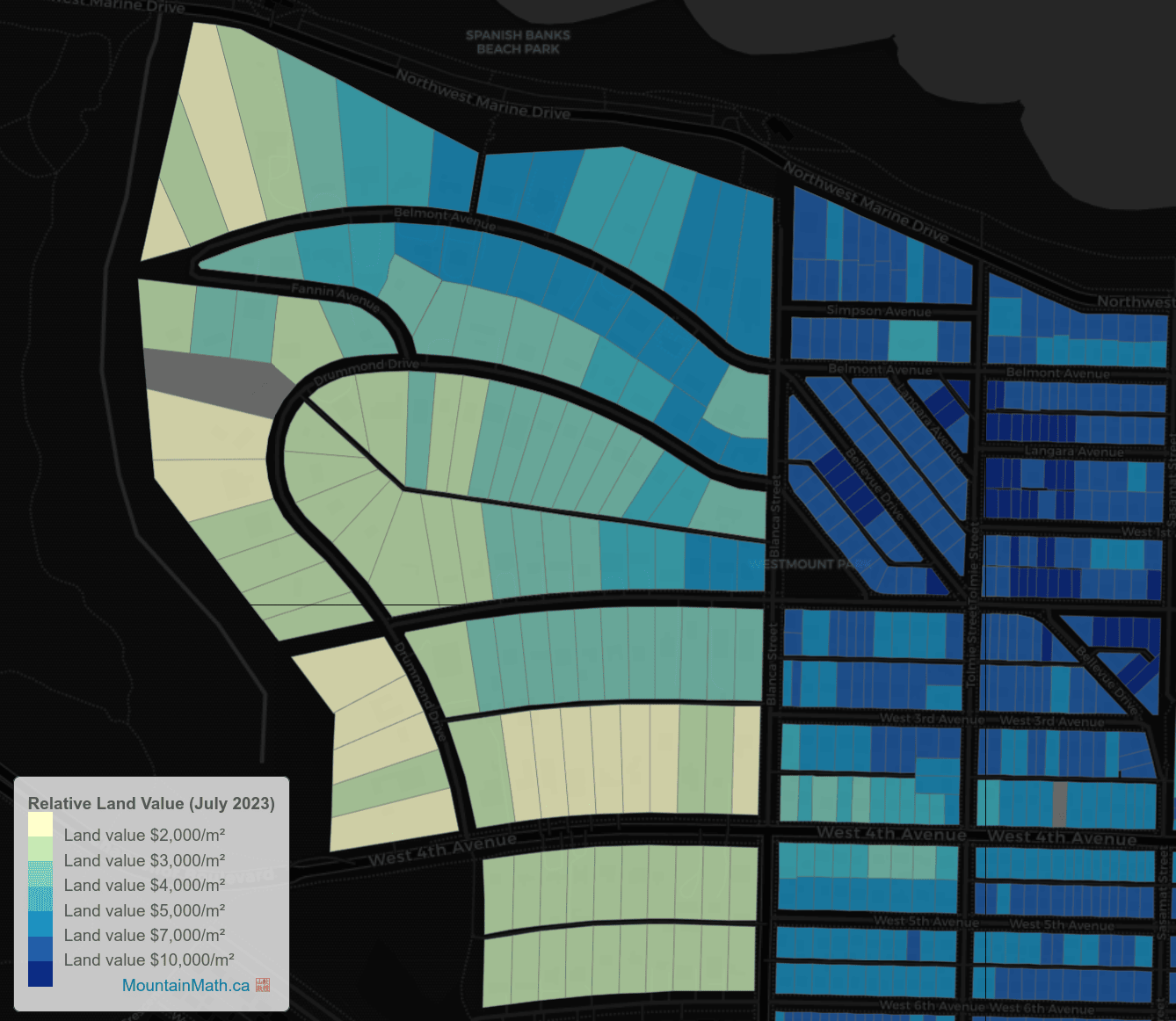
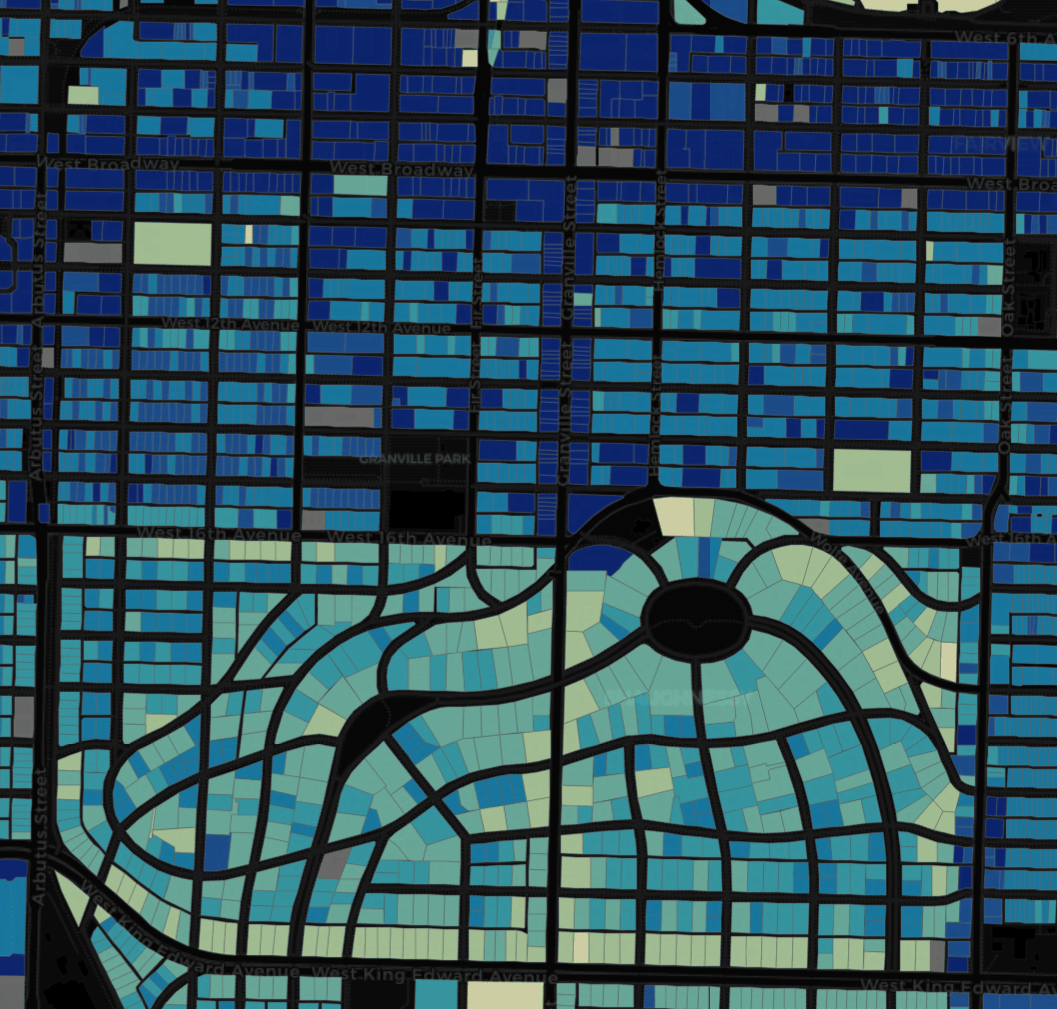
It can be hard to observe this in real life, because dense city centres tend to be pretty expensive. That’s a complicated topic that’s beyond the scope of this blog post, but there are places where it’s easy to see this specific phenomenon in Vancouver with a map of land values. For example:
Left: cheap land and expensive homes. Right: expensive land and relatively cheap homes
This is one of the most expensive neighbourhoods in Vancouver, by design. Apartments are forbidden everywhere, only houses are allowed. And city planning rules require each house to use up much more land west of Blanca Street:
Area
Minimum Lot Size
Land Price/Sq Ft
Land Price/Lot
West of Blanca
12,000-18,000 sqft
Usually around $300
$7M-$30M
East of Blanca
3000-5400 sqft
Usually around $800
$3M-$8M
This is exactly what we were talking about. When the city lets people use less land per home, land prices go up and home prices go down. To be clear, $3M still isn’t cheap; we should go a lot further.
South of 16th we zone for mansions on very large lots (making the land relatively cheap), and north of 16th we allow apartments and condo buildings (making the land relatively expensive). If you know Vancouver at all, you know that those apartments are a lot cheaper than the $10M+ Shaughnessy mansions!
Takeaway
It’s important to distinguish between the cost of land per square foot and the cost of land per home. Limiting density does work to drive the former down, but at a terrible cost: it stops people of modest means from pooling their resources to outbid someone much richer.
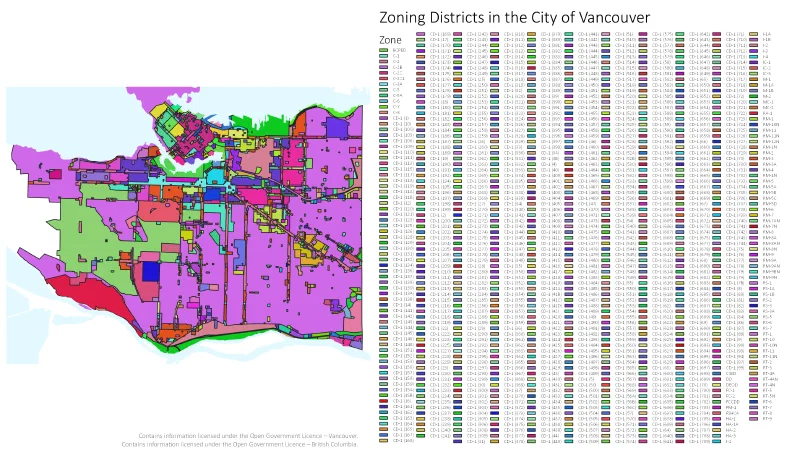
Vancouver has a lot of zoning districts. 895 of them, to be exact1. That works out to roughly 1 zoning district for every 740 residents; I hope you weren’t planning on reading every one.